Ostranauts Pre-Undock Atmosphere Checklist
Verify power, gas mix, scrubbers, alarms, and EVA gear before clamps release
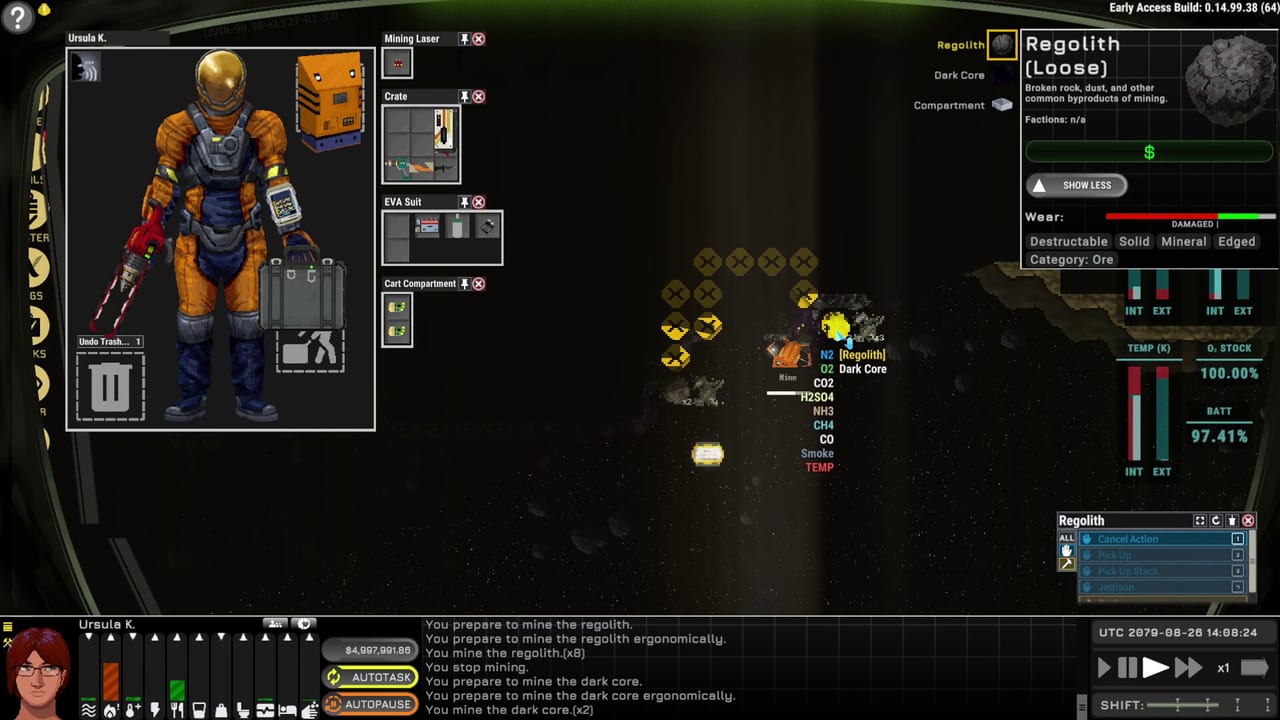
Atmosphere kills more captains than pirates. Depressurization, CO2 creep, and forgotten airlocks fail quietly until a suit alarm or crew collapse forces panic orders. Use this checklist every time you undock after touching life support, adding a room, or hiring crew who sleep in compartments you rarely visit.
The full loop — pumps, conduits, zoning, EVA discipline — is in Manage Atmosphere. This page is the fast walkthrough you run with your hand on the airlock hatch.
When to run this checklist
Mandatory passes:
- First undock of a session
- After ship building changes doors, conduits, or room boundaries
- Before multi-shift trips away from OKLG
- After combat or salvage EVA that might have torn suits or opened valves
- When a new crew member is assigned to a remote bunk
Optional but smart: any undock during learning hours when you still confuse scrubber carts with storage lockers.
Power and batteries first
Atmosphere equipment is electric. Dark ship means dark pumps.
- Reactor or primary power source online and stable
- Battery charge sufficient for pumps + nav + comms through undock
- No critical Power faults on life-support breakers
- Backup battery tied to scrubbers if your layout supports it
- Console readouts visible on the bridge — you cannot fix what you cannot see
If power flickers during dock, resolve it before gas checks. Running pumps on a dying battery while you hail COMMS is how captains vent the bridge accidentally.
O2, N2, and pressure targets
Healthy crew air commonly targets ~20 kPa partial pressure O2 with appropriate N2 balance — exact numbers depend on your ship config, but sudden drift is always bad.
| Check | Target / signal | Fail sign |
|---|---|---|
| O2 partial pressure | ~20 kPa band | Headaches, hypoxia warnings |
| N2 balance | Matches your designed mix | Wrong mix affects totals |
| Room pressure | Stable, not climbing/dropping | Doors hard to open, whistling leaks |
| Temperature | Livable band | Secondary but worth noting |
| CO2 level | Low, scrubbers keeping pace | Crew nausea, rising ppm |
Walk every pressurized room on foot:
- Bridge / helm pressure stable
- Crew bunks breathable
- Storage and cargo zones not accidentally isolated without scrubbing
- New rooms included in conduit network — no forgotten dead-end zones
Scrubber cart and conduit routing
Scrubbers remove CO2; pumps move gas. A cart in the wrong room scrubs nowhere useful.
- Scrubber cart powered and filter status acceptable
- Cart positioned in high-traffic or sleeping volume
- Intake/exhaust paths not blocked by crates or doors
- Conduit graph connects new rooms to source and scrubbing
- Manual valves default to safe positions (no open bypass to vacuum)
After rerouting, watch CO2 for one in-game hour before undock if possible. Spikes that look fine in minute one kill on hour four.
Alarms and automation
You want noise before unconsciousness.
- Atmosphere alarms armed on bridge console
- Thresholds set for pressure loss and CO2 rise — not muted from yesterday’s false trip
- PDA or ship alerts audible from helm
- Crew AI not stuck in a task that ignores alarm response — see crew AI notes if behavior looks wrong
Test by checking readouts, not by venting on purpose. Deliberate decompression tests belong in sandbox saves.
EVA suits and airlocks
Salvage and repair mean leaving the pressurized hull.
- Suits stored where you will grab them under stress
- Suit integrity Green or acceptable — no hidden tears from last EVA
- O2 bottles or suit life rated for planned EVA duration + margin
- Airlock cycle procedure understood: inner door secure before outer opens
- Spare suit for crew if anyone boards the run
- Helmet and tool tether habits reviewed — dropping a wrench hurts less than dropping a seal
If one suit is “Yellow,” repair or swap before undock. EVA on a failing seal turns a profit run into a rescue broadcast.
Airtight and door discipline
- External airlock doors closed and latched
- Internal doors default open or closed per your zoning plan — but never random mid-refit
- No construction gaps — hull breaches show in atmosphere overlay when you know where to look
- Docking collar compatible with target station atmosphere (plan O2 restock if hopping to different standards)
Quick pass / fail gate
NO-GO if any of these are true:
- Unexplained pressure drop in any crew room
- Scrubbers offline while CO2 rising
- Main power unavailable to pumps
- Only damaged suits aboard
- You cannot name which room the scrubber cart serves
GO when power is stable, gas mix in band, scrubbers trending CO2 down, alarms armed, suits ready, and airlocks verified.
After undock
Schedule a mid-trip glance at atmosphere trends on long burns. Combat damage can pierce hull sections you did not watch during the fight. If alarms trip in flight, prioritize power to pumps and seal the breach before you finish the bounty loop.
Re-read Manage Atmosphere when you expand the hull — this checklist scales with ship size, but the order stays the same: power, gas, scrub, alarm, suit, undock.
Frequently Asked Questions
Quick answers for spacers who want to stay alive.
What O2 level should I target before undocking?
Most stable setups aim for roughly 20 kPa partial pressure O2 with balanced N2. Watch for drift, not just a single snapshot — see Manage Atmosphere for the full tuning loop.
Where should the scrubber cart go?
Place it in a volume crew actually breathe — bridge, bunks, or central corridor — with clear intake path and power. A cart scrubbing an empty storage room does not help sleeping crew.
Do I need this checklist if I only fly short OKLG hops?
Yes, until the routine is automatic. Short hops kill captains who undock with dying batteries or a crew bunk still isolated after a refit.