Asteroid Mining in Ostranauts
Tether clusters, handheld tools, explosives, ore grades, and selling at Ceres ports
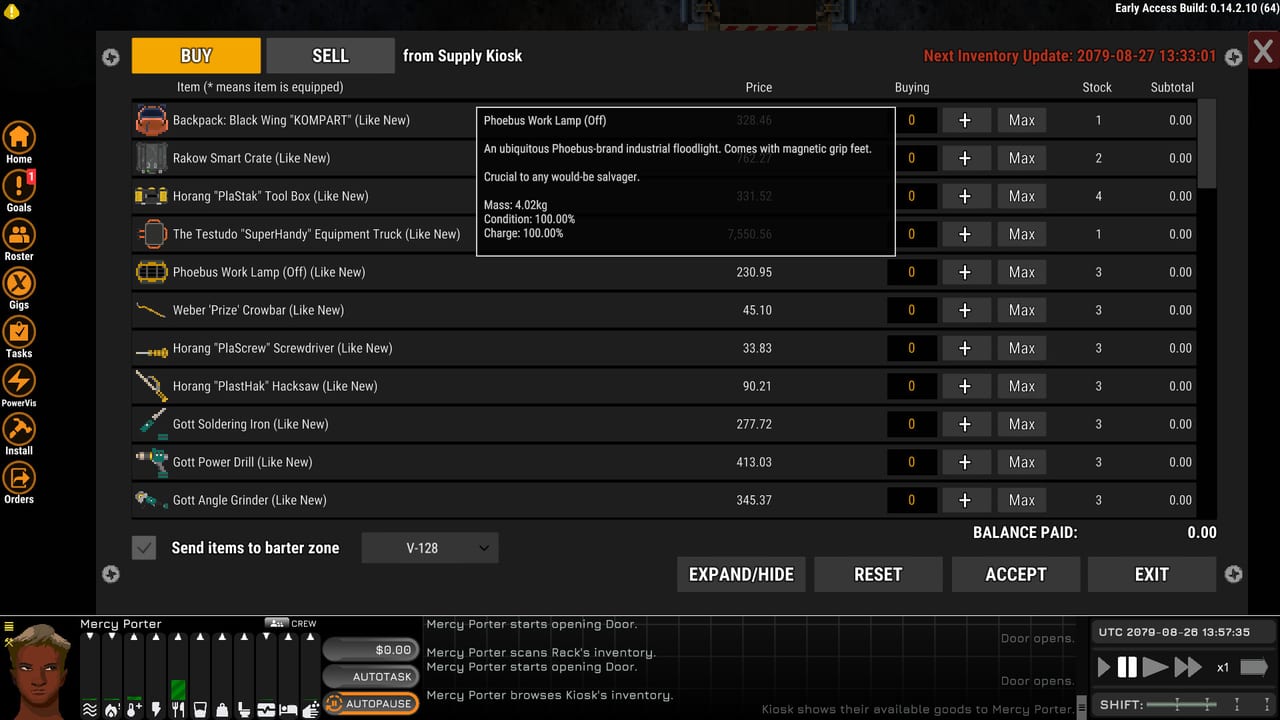
Asteroid mining entered Ostranauts with Fire in the Hold and matured in the 1.0 release — a belter income loop that shares hardware with ship combat and faction politics on Ceres. Blue Bottle Games treats asteroids as physical places you approach, tether, and strip — not abstract resource nodes. Handheld cutters, shaped charges, and mass drivers meant for ore can kill a pirate if your closing geometry aligns. This guide covers tether operations, tools, ore types, cargo mass, selling at BCER Port Mojave and BCRS Zhonghuamen, safety during EVA, and how mining fits beside salvage and combat.
Learn How to Fly and Dock before your first cluster approach — tethering resembles docking with extra rotation risk.
Fire in the Hold mining context
Mining is industrial gameplay with combat overlap. Explosives that fracture nickel-iron also vent compartments if you detonate inside a pressurized deck. Mass throwers on your hull double as weapons when VCRS and bearing align — see Ship Combat. Faction ports buy different ore mixes at different rates; hauling gangue to the wrong station erases margin.
The Ceres belt is the economic center — proxy wars, pirate scavengers, and corporate escorts share lanes with mining tugs. Read the Ceres conflict zone before you commit a slow, heavy ore haul through contested space.
Tethering to asteroid clusters
Approach an asteroid cluster the way you approach a station berth:
- Plot intercept on the nav map — match cluster velocity before you close distance
- Reduce VREL toward zero on the cluster anchor point
- Deploy tether hardware — functionally similar to docking clamps adapted for irregular rock
- Confirm hull stress and RCS fuel headroom — rotating asteroids torque attached ships
Once tethered, EVA crews work the surface while the ship holds attitude. A drifting tether tears suits and vents cargo bays. Practice short tethers on quiet inner-system rocks before Ceres runs where pirates watch for laden tugs.
Super fast-forward helps long transits to rich clusters — stock batteries and life support for multi-day burns per Stations and Travel.
Handheld tools and explosives
Surface mining uses handheld tools and explosives selected from EVA loadouts:
- Cutters and drills — strip surface regolith and embedded veins with controlled material loss
- Shaped charges — fracture stubborn seams; overcharge sends debris toward your hull
- Survey gear — identify ore grades before you waste shift time on gangue
Queue Orders from the PDA when crew assist — crew AI haul paths must route ore crates to marked cargo zones. Forbid zones keep NPCs out of blast radii during charge placement.
Industrial gear overlaps combat — treat explosives inventory like ammunition: secure storage, fire suppression, and fire and smoke drills after accidents.
Ore types and what to keep
Asteroid compositions vary by cluster seed and region. Common categories captains track:
Bulk industrial
- Iron — structural feedstock; moderate value, high mass
- Olivine and silicates — filler sold in bulk or discarded as gangue
- Carbon — chemical and plastic feed chains
Precious and strategic
- Platinum, iridium, palladium — high credit per kilogram; prioritize cargo bay space
- Cobalt and gold — mid-tier strategic metals
- Wolfram (tungsten) — dense; watch total ship mass
Volatiles
- Hydrates — water and volatiles for life support resale or onboard cracking
- Gangue — waste rock; jettison on site when cargo mass caps bite
Compare kiosk buy bands at destination before you undock — Salvage Economy pricing logic applies to ore barter even when the SKU list differs.
Selling ore: BCER and BCRS
Faction-aligned Ceres ports buy mining output with different politics:
- BCER (Ceres Resource Extraction) — Port Mojave and Calico City–adjacent kiosks favor Galilean Confederacy traders; some restricted sales need Trusted standing
- BCRS (Coalition for Ceres Resource Extraction) — Zhonghuamen districts on Ring Station pay competitive rates for neutral haulers if you avoid shooting their escorts
Reputation gates mirror combat vendors — mining income collapses if you pick fights that lock your favorite buyer. Neutral standing lets you shop both sides until story choices commit you.
Short-hop gigs on Ceres stations from 1.0 patches help cover dock fees while ore prices fluctuate — useful when combat repairs drained your account.
Mass, cargo, and ship fit
Ore is mass — the silent killer of mining margins:
- Starter hulls fill cargo bays after one rich platinum pocket
- Heavy loads slow RCS response during pirate intercepts
- Fusion torch remass costs rise when you accelerate overweight tugs — budget fusion torch drive upgrades for belt commutes
Plan round trips: mine, jettison gangue, sell high-grade, restock explosives, repeat. Ship Building expansions should add cargo isolation from crew quarters — contaminated dust and volatile pockets belong behind airtight doors.
Use the salvage run checklist mindset for mining departures: tools, suits, tether spare parts, and sell-order research.
EVA safety and atmosphere
Mining EVA kills captains who treat rocks like padded stations:
- Tether discipline — always secured to ship or rock anchor; rotating clusters snap loose lines
- Suit integrity — micrometeoroids and blast debris puncture fabric; carry spare suits if crew accompany you
- O2 and CO2 — long surface shifts exhaust canisters; monitor scrubber status on ship before multi-hour EVA
- Death pay — fatalities trigger escrow payouts on hired crew — read Hire Crew before bringing miners
Accidental hull breaches from internal explosions tie directly to Manage Atmosphere recovery — vent contaminated bays before pressurizing bunks.
Mining versus salvage income
Salvage at OKLG pays steady tutorial-era bills — permits near $5000/day, uninstall loops, vendor repair math in How to Salvage. Mining pays higher peaks with higher risk: longer transits, faction politics, pirate lanes, and volatile cargo.
Mid-game captains often alternate — salvage solvency funds torch refits; mining funds combat ammo; combat clears pirate threats on return lanes. Bounty hunting adds a third income spike when warrants overlap mining routes.
Related pages
- Ship Combat — shared mass-driver hardware
- Ceres Conflict Zone — where belt income meets proxy war
- How to Salvage — stripping mining wrecks
- Stations and Travel — torch range and Ceres staging
- Fusion Torch Drive — reaching rich clusters
- Fire and Smoke — explosive accident recovery
- Updates — mining economy tweaks at 1.0
Frequently Asked Questions
Quick answers for spacers who want to stay alive.
How do I tether to an asteroid in Ostranauts?
Match cluster **VREL** near zero, approach the anchor point like a dock, and engage tether hardware once alignment is stable. Rotating clusters demand active RCS — practice on quiet rocks before Ceres lanes with pirates.
Where should I sell mining ore near Ceres?
**BCER Port Mojave** and **BCRS Zhonghuamen** on Ring Station buy common ore grades — prices and access depend on faction standing. Read Stations and Travel before you haul mass to the wrong buyer.
Can mining explosives damage my ship?
Yes. Shaped charges vent compartments and start fires if misplanted. Secure blast zones with forbid rules, stock extinguishers, and read Fire and Smoke before industrial EVA.